Under the Americans with Disabilities Act (ADA), public accommodations—including retail stores—are legally required to ensure their facilities are accessible to individuals with disabilities. One frequently overlooked area is the fitting room. Yet for millions of people who use mobility aids or require additional support, a poorly designed fitting room can be a barrier to independence and dignity.
Accessible fitting rooms aren’t just a matter of legal compliance—they’re an essential part of creating a welcoming, inclusive customer experience. Failing to comply with ADA fitting room requirements can lead to lawsuits, fines, and damage to your brand reputation. This guide walks you through the specific design standards, common pitfalls, and practical steps to ensure your store meets accessibility expectations.
Understanding ADA Standards for Fitting Rooms
The ADA Standards for Accessible Design apply to any public accommodation offering dressing, locker, or fitting rooms. These standards ensure equal access and usability for individuals with mobility, vision, or physical disabilities. Retailers must provide at least one accessible fitting room wherever fitting rooms are provided to the public.
Accessible fitting rooms must follow the 2010 ADA Standards for Accessible Design, specifically section 803 and relevant portions of 604 (benches), 609 (grab bars), and 703 (signage).
Key ADA Requirements for Fitting Rooms
Size and Space
Accessible fitting rooms must include adequate space for individuals using wheelchairs or mobility devices to navigate comfortably.
- Turning Space: A clear 60-inch turning diameter is required within the room.
- Clear Floor Space: A minimum of 30″ x 48″ clear floor area in front of each accessible element.
- Privacy: Full-height doors and panels are recommended to maintain dignity and privacy.
Doorways
Doors should not obstruct access or movement within the fitting room.
- Clear Width: Doorways must be at least 32 inches wide when open.
- Swing Direction: Doors should swing outward if space inside is limited.
- Hardware: Use lever handles or push/pull hardware that does not require tight grasping, pinching, or twisting.
Benches
Each accessible fitting room must include a bench meeting the following:
- Dimensions: Minimum 42 inches long, 20 to 24 inches deep, and at least 17 to 19 inches high.
- Back Support: Must be provided and extend across the length of the bench.
- Structural Strength: Should support at least 250 pounds.
Grab Bars
Grab bars provide support and stability for individuals with balance or mobility challenges.
- Placement: Grab bars should be installed along the rear or side wall near the bench.
- Height: Must be mounted 33 to 36 inches above the finished floor.
- Design: Bars must be securely anchored and not obstruct access to other elements.
Mirrors
Mirrors in accessible fitting rooms must accommodate both standing and seated users.
- Full-Length Requirement: Mirrors should be at least 18 inches wide and mounted with the bottom edge no more than 35 inches from the floor.
Lighting
Proper illumination ensures safety and usability.
- Brightness: Ensure adequate lighting to support low-vision individuals.
- Fixture Placement: Avoid glare or shadows that may interfere with navigation.
Signage
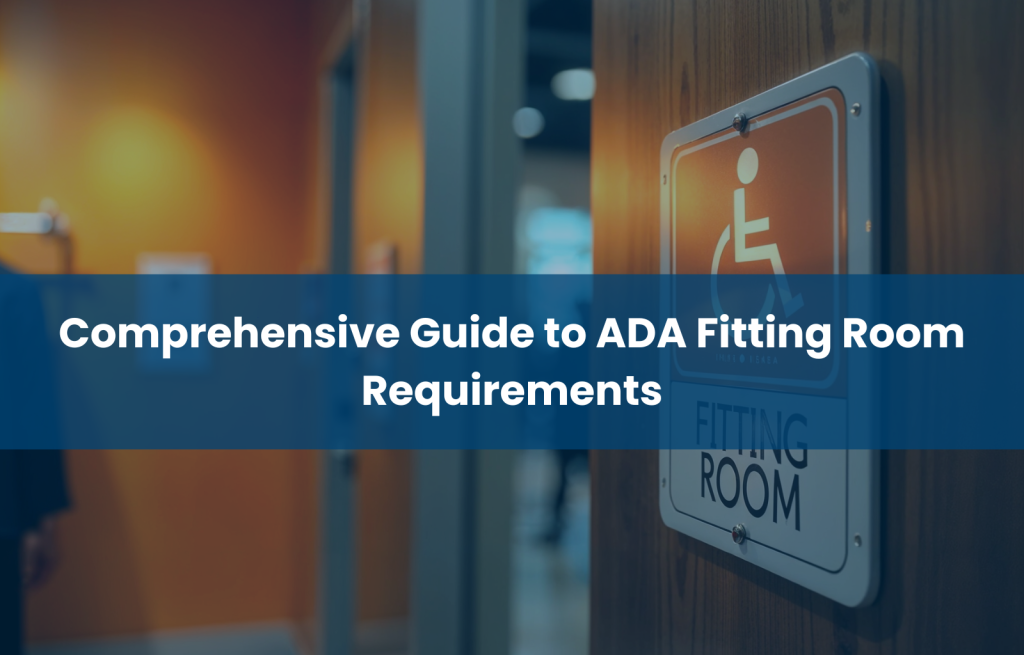
Accessible fitting rooms must be clearly marked.
- Identification: Use the International Symbol of Accessibility where applicable.
- Tactile/Braille: ADA signs must include raised characters and Grade 2 Braille.
- Mounting Height: Signage must be mounted 48–60 inches from the ground.
Benefits of ADA-Compliant Fitting Rooms
- Improved Customer Experience: All shoppers deserve equal access to try on products comfortably and safely.
- Legal Risk Mitigation: Avoid complaints, legal action, or fines by ensuring compliance.
- Inclusive Brand Identity: Demonstrates your business’s commitment to equity and inclusion.
- Increased Revenue: People with disabilities represent over $500 billion in spending power annually.
Common Mistakes to Avoid
- Not installing grab bars or compliant benches.
- Using non-accessible door hardware or inward swinging doors that restrict movement.
- Failing to provide adequate turning space.
- Skipping ADA signage or placing it incorrectly.
- Mounting mirrors too high for wheelchair users.
- Inadequate lighting or mirror visibility.
Implementing ADA Guidelines in Your Store
Here’s how to get started:
- Assess Existing Fitting Rooms: Conduct an ADA accessibility audit with a professional consultant.
- Plan for Compliance: Ensure future remodels or expansions include ADA considerations from the beginning.
- Staff Training: Educate your team on how to maintain accessible features and assist customers respectfully.
- Ongoing Reviews: Regularly inspect your facilities and update signage, lighting, and hardware as needed.
Conclusion
Fitting rooms should be a space of privacy, dignity, and inclusion—not exclusion. ADA-compliant fitting rooms aren’t just required by law—they reflect your business’s commitment to serving all customers equally. Start by evaluating your current setup and planning upgrades where needed.
Need help ensuring your fitting rooms are ADA-compliant? Contact Accessibility Innovations for a full audit and practical guidance on accessible design.
Frequently Asked Questions (FAQs)
What are the basic ADA requirements for fitting rooms?
They must include accessible doors, turning space, compliant benches, and accessible signage. At least one fitting room must be fully ADA-compliant.
Are benches mandatory in all fitting rooms?
Only in ADA-designated accessible fitting rooms. They must meet ADA size, support, and placement standards.
How should mirrors be installed to comply with ADA standards?
Mirrors must be full-length and mounted with the bottom edge no more than 35 inches above the floor.
What are the specifications for door hardware in accessible fitting rooms?
Doors must have accessible hardware such as lever handles or push/pull mechanisms and open with less than 5 pounds of force.
Do all fitting rooms need to have Braille signage?
Only the accessible ones require tactile and Braille signage to identify them.
How can I ensure my fitting rooms remain compliant over time?
Perform regular inspections, train staff, and schedule accessibility audits to catch and resolve any issues as standards evolve.