Mobile Accessibility Training Courses
Our Mobile Accessibility Training Courses are designed to equip development teams, designers, and product leaders with the knowledge and practical skills to create mobile apps that are accessible to all users—including those with disabilities. Whether you build for iOS or Android, this course will help you meet ADA mobile accessibility standards and align with WCAG 2.2 for mobile platforms.
The training covers accessibility fundamentals, native mobile accessibility, touch interaction design, testing tools, and responsive mobile design—all tailored to real-world app development scenarios. Participants will learn how to integrate accessibility best practices into the entire development lifecycle.
Mobile Accessibility Training Course Overview
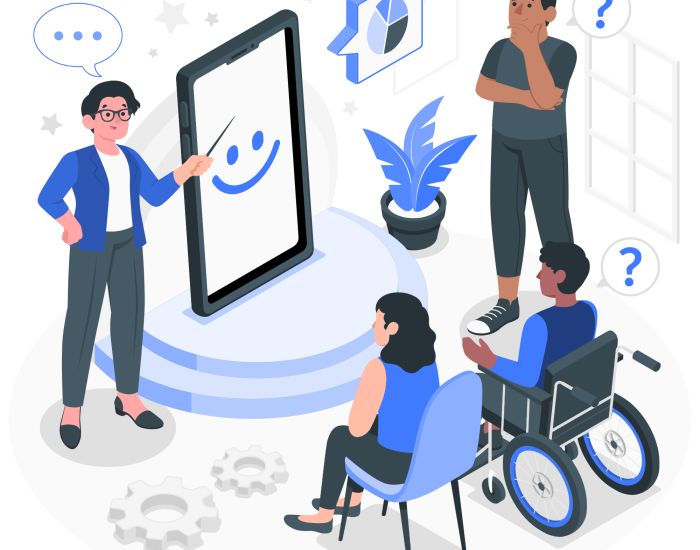
This course provides a comprehensive introduction to mobile accessibility, offering both theoretical and hands-on guidance. Participants will learn how to identify and remediate accessibility barriers in native and hybrid mobile applications using WCAG mobile guidelines, platform-specific APIs, and popular testing tools. By the end of the program, you’ll be able to build and evaluate mobile experiences that are inclusive and legally compliant.
Course Duration
4 weeks (with weekly live or self-paced sessions, assignments, and project work)
Learning Outcomes
- Understand ADA and WCAG guidelines for mobile platforms
- Apply accessible design principles to native and hybrid apps
- Use screen readers and accessibility testing tools
- Remediate common mobile accessibility issues
Target Audience
This course is perfect for:

Mobile app developers (iOS and Android)

UI/UX designers working on mobile platforms
QA testers responsible for accessibility validation

Product managers overseeing digital compliance

Accessibility consultants looking to enhance mobile expertise
Whether you’re building public apps or internal tools, this course will help your team deliver ADA-compliant mobile solutions.
ADA/WCAG Compliance Help
Our mobile accessibility training is built around the standards defined in ADA, Section 508, and the Web Content Accessibility Guidelines (WCAG 2.1 & 2.2). You’ll learn how to meet compliance requirements in the mobile context by building inclusive, accessible apps from the ground up. This training is ideal for organizations aiming to reduce legal risk while improving overall usability and digital inclusion.
Course Curriculum
Our curriculum is broken into four structured weekly lessons, each building your skill set step-by-step:

Week 1: Introduction to Mobile Accessibility
- What is mobile accessibility?
- Understanding ADA & WCAG for mobile
- Assistive technologies on mobile devices
Week 2: Responsive Design and Mobile Accessibility
- Responsive frameworks and flexible layouts
- Content reflow and zoom compatibility
- Cross-platform UX strategies

Week 3: Touch Interactions and Mobile-Specific Features
- Gestures and tap targets
- VoiceOver and TalkBack integration
- Avoiding motion triggers and cognitive overload

Week 4: Testing and Evaluation
- Using screen readers and simulators
- Automated vs. manual testing
- Remediation plans and documentation best practices
Frequently Asked Questions (FAQ's)
+
Who should take this course?
This course is ideal for developers, designers, QA testers, and product leads working on mobile apps who want to improve accessibility and meet ADA compliance.
+
What tools will I learn?
Participants will gain hands-on experience with tools such as VoiceOver, TalkBack, Google Accessibility Scanner, and Xcode/Android Studio accessibility features.
+
Do I need coding experience?
While helpful, coding experience is not mandatory. The course accommodates both technical and non-technical participants.
+
Will I get a certificate?
Yes, participants who complete the course and final project will receive a Certificate of Completion in Mobile Accessibility.
+
Is this course platform-specific (iOS/Android)?
The course covers both iOS and Android development environments, including native and hybrid app frameworks.
+
Is the training live or self-paced?
We offer both live cohort sessions and self-paced online modules, depending on your preference and schedule.