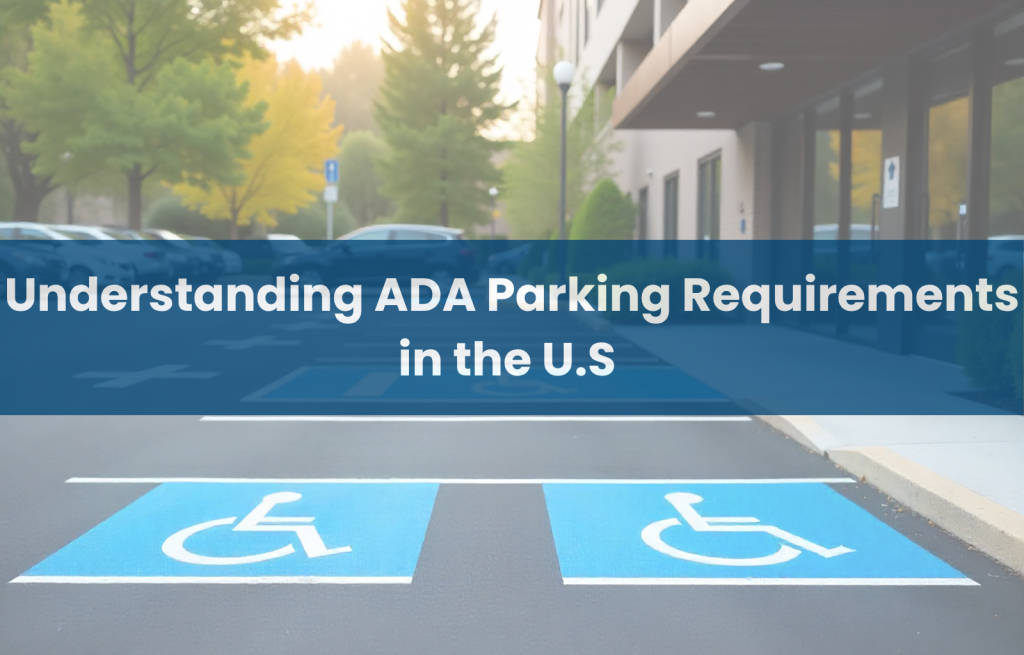
ADA parking requirements are federal standards that ensure parking areas are safe and accessible for people with disabilities. These designated accessible parking spaces are wider, clearly marked, and placed near entrances. They allow individuals using wheelchairs, walkers, or other mobility aids to access facilities independently and safely.
Accessible parking is not just a regulatory requirement, it’s an important step toward inclusivity and equal access. By designing parking lots with ADA compliance in mind, businesses and institutions create environments that are welcoming to everyone, including people with mobility, vision, and other disabilities.
What Are ADA Accessible Parking Requirements?
The Americans with Disabilities Act (ADA) requires public and commercial buildings to provide accessible parking that complies with specific design rules. These ADA accessible parking requirements are enforced by the U.S. Department of Justice and apply to:
- Offices
- Retail stores
- Schools and universities
- Hospitals and healthcare facilities
- Government buildings
- Entertainment venues
Facilities must include the correct number of accessible parking spaces, signage, and design elements based on the 2010 ADA Standards for Accessible Design.
How Many Accessible Parking Spaces Are Required?
The number of required ADA parking spaces depends on the total number of parking spots in a lot. Use this quick reference guide:
| Total Parking Spaces | Minimum Accessible Spaces |
| 1–25 | 1 |
| 26–50 | 2 |
| 51–75 | 3 |
| 76–100 | 4 |
| 101–150 | 5 |
| 151–200 | 6 |
| 201–300 | 7 |
| 301–400 | 8 |
| 401–500 | 9 |
| 501–1,000 | 2% of total spaces |
| 1,001+ | 20 + 1 for each 100 over 1,000 |
These requirements are designed to ensure accessibility across facilities of all sizes, from small businesses to large shopping complexes. For example, a small retail shop with 20 parking spaces only requires one accessible space, while a large hospital parking lot with 1,200 spaces would require at least 23 accessible spaces, including van-accessible options.
Van-Accessible Spaces: At least 1 in every 6 accessible spaces must be van-accessible.
Minimum Dimensions:
- Standard accessible space: 96″ wide + 60″ access aisle
- Van-accessible space: 96″ wide + 96″ access aisle
Accessible Parking Sign Requirements & Standards
Accessible parking signage standards ensure that designated spaces are clearly marked and enforceable. According to ADA guidelines:
- Must display the International Symbol of Accessibility (ISA)
- Signs must be mounted at least 60 inches from the ground to the bottom edge
- Van-accessible spaces must have a “Van Accessible” sign
- Signs must remain visible even when a vehicle is parked
Sensory Consideration:
- Use high-contrast, non-glare colors (e.g., white on blue)
- Apply retroreflective materials to improve visibility at night or in low-light conditions
Parking Space Accessibility Laws in the U.S.
ADA parking rules fall under Title III of the ADA. However, some cities and states have additional or stricter parking space accessibility laws. For full compliance, businesses must follow both federal and applicable state/local codes.
For example, California has specific accessibility requirements that exceed federal ADA standards, such as additional slope and surface texture requirements. Understanding local regulations is essential to avoid violations and ensure full accessibility.
Non-compliance penalties include:
- Fines and citations
- Civil lawsuits or settlements
- Public complaints and reputational damage
Ensuring accessible parking is part of your legal and ethical responsibility to provide parking for people with disabilities.
Common ADA Parking Violations and How to Avoid Them
Frequent Issues:
- Too few accessible spaces
- Missing or low-mounted signage
- Improper or missing access aisles
- Faded paint or unclear markings
- Blocked aisles or misuse by unauthorized vehicles
Solutions:
- Conduct annual accessibility audits
- Use ADA-compliant paint and signage
- Mark and maintain access aisles
- Educate tenants or staff on proper usage
- Hire experts to review your compliance plan
Addressing violations proactively helps prevent costly fines and improves safety for all visitors. Regular audits and clear maintenance practices ensure that accessible parking areas remain functional and compliant over time.
Maintaining Accessible Parking Year-Round
Accessibility is not one-and-done. Facilities must maintain access in all seasons.
Maintenance Best Practices:
- Repaint stripes and replace damaged signs as needed
- Keep aisles, ramps, and curb cuts clear of snow, ice, debris, and parked vehicles
- Regularly inspect for cracks, obstructions, or hazards that may hinder mobility
Operational maintenance is essential to long-term compliance and usability.
Conclusion
Meeting ADA parking space requirements is critical for inclusive design, legal compliance, and creating a welcoming environment for all. By understanding how many accessible parking spaces are required, implementing compliant signage and dimensions, and maintaining those standards year-round, your business becomes more accessible to everyone.
Accessibility isn’t just a legal obligation, it’s a commitment to creating environments where everyone can participate fully and independently. A well-designed accessible parking plan reflects a company’s dedication to equality and community responsibility.
Not sure where to start? Contact Accessibility Innovations for an ADA parking audit or consultation today.
FAQs about How to Make Buildings More Accessible
Are accessible parking requirements the same in every province?
No. In the U.S., ADA applies nationally. In Canada, accessibility is governed by regional codes. Always check your local building codes.
How many accessible parking spaces are required in a parking lot?
It depends on the total number of spaces. For example, a lot with 100 spaces must have at least 4 accessible spots. For lots over 1,000, add 1 accessible space per 100 beyond the first 1,000.
What are the penalties for not complying with accessible parking requirements?
Penalties can include:
- Fines from local authorities
- Lawsuits filed by individuals or advocacy groups
- Negative media attention
Can I convert a regular parking space to an accessible one?
Yes — but you must meet ADA parking space requirements, including proper width, access aisle, signage, and proximity to the entrance.