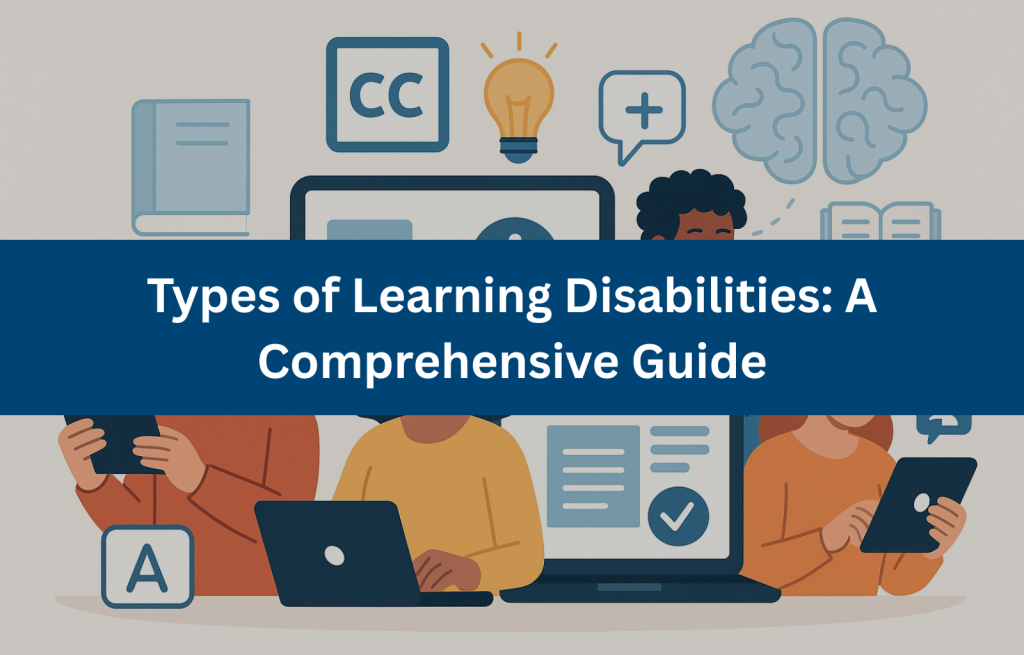
Learning disabilities affect the way a person receives, processes, or expresses information. They can influence reading, writing, math, memory, focus, and organization but they do not reflect a person’s intelligence or capabilities. Individuals with learning disabilities are often bright, creative, and highly skilled thinkers who simply learn in different ways.
For clarity, this guide uses the U.S. definition of learning disabilities: neurological processing differences such as dyslexia, dyscalculia, and dysgraphia not intellectual disabilities.
This article covers the most common types of learning disabilities, how they affect daily life, helpful technology, and accessibility practices that support inclusive learning.
Why Learning Disabilities Matter in Digital Accessibility
Understanding learning disabilities is important not only in education but also in the digital world. Many people with LDs rely on websites, apps, online learning systems, PDFs, and digital services every day. When digital content is not designed with cognitive accessibility in mind, these users may struggle to read text, follow instructions, complete forms, or navigate a website.
Under the Americans with Disabilities Act (ADA), organizations must ensure their digital content is usable by people with cognitive and neurological disabilities. This includes providing clear layouts, readable text, consistent navigation, and accessible documents. By designing digital content with these needs in mind, businesses create more inclusive experiences and reduce accessibility barriers.
What Are Learning Disabilities?
Learning disabilities are neurological differences that change how someone understands, remembers, or communicates information. These conditions affect specific skills like reading, writing, math, or motor coordination. Learning disabilities do not limit intelligence, but inaccessible digital environments can create unnecessary barriers. For example, dense text, confusing navigation, low contrast, and complex instructions can make it harder for individuals with LDs to interact with websites, documents, and online tools. Understanding these challenges helps organizations create content that is easier to process and aligns with ADA and WCAG accessibility expectations.
A key point to remember:
Learning disabilities are not related to intelligence.
People with LDs learn differently, not less.
Learning disabilities are lifelong, but with the right tools, accessibility features, and support strategies, individuals can learn effectively and succeed in any environment.
What Are the Main Types of Learning Disabilities?
Below are the most common categories of learning disabilities, along with simple, real-life examples.
ADHD (Attention-Deficit/Hyperactivity Disorder)
Important Note: ADHD is not technically classified as a learning disability, but it often occurs alongside them and significantly affects learning and daily functioning.
People with ADHD may experience:
- Difficulty staying focused
- Forgetting steps or instructions
- Trouble organizing tasks
- Impulsivity or restlessness
These challenges affect learning even though ADHD itself is a neurodevelopmental disorder, not an LD.
Dyslexia
A language-based learning disability affecting reading and word recognition.
Examples:
- Mixing up letter order
- Slow or effortful reading
- Difficulty decoding new words
Dyscalculia
A math-related learning disability that affects numerical understanding.
Examples:
- Difficulty with basic math
- Trouble telling time
- Confusion with number patterns
Dyspraxia (Developmental Coordination Disorder)
A condition affecting motor coordination and planning.
Examples:
- Difficulty writing or drawing
- Trouble with buttons, clothing, or tying shoes
- Challenges with physical coordination
Dysgraphia
A condition affecting writing skills and fine-motor control.
Examples:
- Messy handwriting
- Trouble spelling
- Difficulty translating thoughts into written words
Auditory & Visual Processing Disorders
These affect how the brain interprets sounds or visual information, not the ears or eyes.
Examples:
- Difficulty following spoken directions
- Confusion between similar letters or words
- Misinterpreting visual cues
Visual Motor Deficit
A challenge involving the connection between vision and motor movement.
Examples:
- Trouble aligning numbers in math
- Difficulty copying notes from a board
- Poor spacing when writing
How Learning Disabilities Impact Daily Life
Learning disabilities affect far more than academics. They may influence:
- Following multi-step instructions
- Keeping track of tasks or schedules
- Understanding written directions
- Reading maps or signs
- Staying organized
- Writing emails or reports
- Managing time
Technology That Helps With Different Types of Learning Disabilities
Modern technology provides powerful support for people with learning disabilities.
Text-to-Speech (TTS)
Read text aloud, helping with reading comprehension.
Speech-to-Text
Useful for people who think better verbally than in writing.
Audiobooks & Podcasts
Support comprehension without requiring visual reading.
Screen Readers
Assist with reading digital content, helpful for processing or visual difficulties.
Organizational Tools
Apps like calendars, reminders, and visual planners help with ADHD and executive functioning.
Built-in Accessibility Features (Highly Important!)
Every major operating system includes helpful tools:
- iOS: VoiceOver, Speak Screen, background sounds
- Android: TalkBack, Select-to-Speak, Reading mode
- Windows: Narrator, Magnifier, Focus Assist
- macOS: VoiceOver, dictation, zoom, colour filters
These tools make learning and daily tasks significantly easier.
ADA & WCAG Requirements for Cognitive and Learning Disabilities
The ADA requires organizations to ensure that digital content including websites, mobile apps, online learning tools, and documents is accessible to people with cognitive and learning disabilities. While the ADA does not list specific technical rules, most organizations follow the Web Content Accessibility Guidelines (WCAG) to meet compliance expectations.
What Are the Signs of Learning Disabilities?
Common signs include:
- Difficulty reading or spelling
- Struggling with math
- Trouble focusing
- Forgetting steps
- Poor handwriting
- Difficulty understanding instructions
- Trouble organizing thoughts
- Avoiding reading or writing tasks
Early observation helps individuals get support sooner and improves long-term outcomes.
How Accessibility Supports People With Learning Disabilities
Accessible design reduces cognitive load and helps people process information more easily.
Helpful accessibility strategies include:
Clear, simple language
Reduces confusion and supports comprehension.
Consistent navigation
Predictability helps users know what to expect.
Readable text (good spacing, contrast, larger font)
Supports users with visual-processing challenges.
Multiple content formats
Providing text, audio, and visual options allows people to choose how they learn best.
Chunking information
Breaking content into small, clear sections helps with memory and focus.
Accessible content benefits all users, not just those with learning disabilities.
Conclusion
Learning disabilities influence how individuals read, process, and interact with information, but thoughtful digital design can significantly reduce barriers. When organizations follow ADA expectations and apply WCAG guidelines, they help ensure that websites, apps, documents, and online systems are usable for people with a wide range of cognitive needs. Prioritizing accessibility not only improves comprehension but also creates more inclusive digital experiences for everyone.
If your organization wants to ensure its website, documents, or online learning tools support users with learning disabilities, reviewing your digital accessibility is a valuable first step. Accessibility Innovations provides guidance, accessibility audits, and accessibility remediation services that help businesses align with ADA expectations and create more usable experiences for all.
FAQs About Learning Disabilities
Can someone have more than one learning disability?
Yes, multiple learning disabilities often occur together, such as dyslexia and dysgraphia.
How do learning disabilities affect a person’s daily life?
They may impact reading, writing, organization, memory, or time management, but with support, individuals adapt successfully.
Are learning disabilities permanent?
Yes, but people learn strategies and use accessible tools that make these challenges manageable.
What tools or technology can help with learning disabilities?
Text-to-speech, speech-to-text, audiobooks, screen readers, planners, and built-in accessibility settings.
How does accessibility help people with learning disabilities?
It improves clarity, reduces cognitive load, and offers multiple ways to understand information.
Are learning disabilities the same as learning difficulties?
No. In the U.S., “learning disability” refers to neurological processing differences, not intellectual disability.
What is the difference between ADHD and a learning disability?
ADHD is a neurodevelopmental condition affecting focus and executive functioning. It is not a learning disability but often overlaps with them.