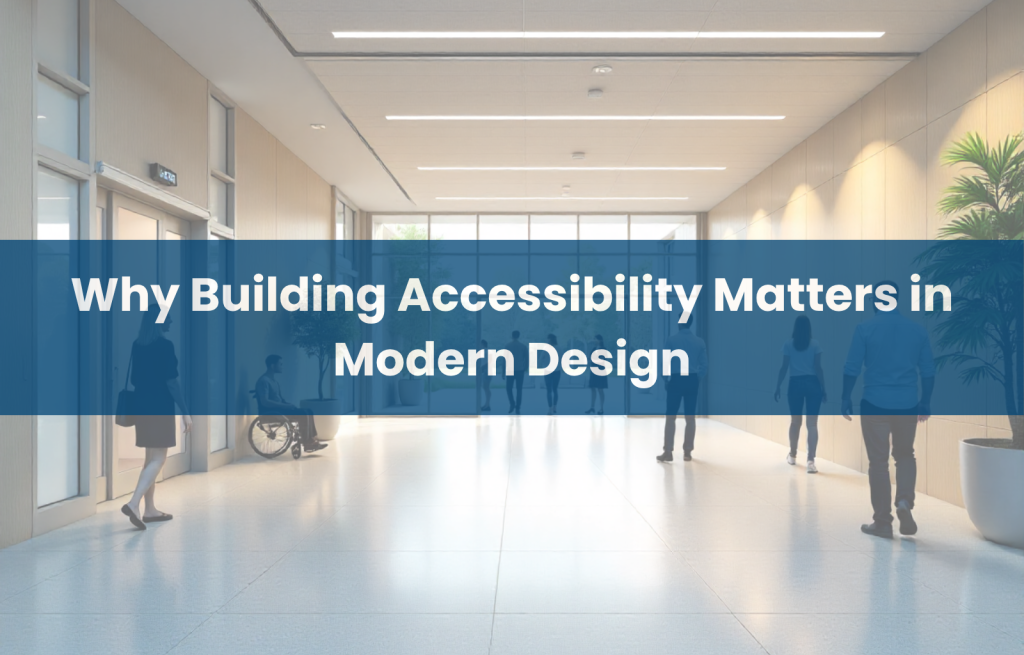
Building accessibility is not just a design consideration, it’s a fundamental human right and a cornerstone of inclusive architecture. It ensures that everyone, regardless of ability, age, or condition, can enter, navigate, and use a building safely, comfortably, and independently. In modern design, creating accessible buildings goes beyond minimum code compliance. It’s about designing for dignity, equality, and usability for all.
Whether someone uses a wheelchair, has a vision or hearing impairment, or simply pushes a stroller, building accessibility enables equitable participation. It also supports better user experience for all — making accessibility a central element of responsible, human-centered design.
What is Building Accessibility and Why It’s Crucial for Everyone
Building accessibility refers to the ease with which people of all abilities can approach, enter, and use a space. It’s about more than ramps and elevators; it encompasses pathways, restrooms, signage, acoustics, and lighting. True accessibility is about removing physical, sensory, and communication barriers.
For example, a building with a ramp and wide doorways helps wheelchair users and parents with strollers. Accessible signage and good lighting help those with low vision. Quiet areas and consistent wayfinding can support people with cognitive or sensory sensitivities. Accessibility benefits everyone – not just people with disabilities.
Why Building Accessibility is Essential for Inclusivity, Compliance, and User Experience
Designing for accessibility is essential for three major reasons:
- Inclusivity – Accessible buildings support equal access and full participation for all people, including seniors, individuals with disabilities, and others facing temporary or permanent mobility or sensory limitations.
- Compliance – Laws such as the America Disability Act (U.S.) and provincial building codes establish minimum requirements, but true inclusivity often requires going beyond these legal baselines. Standards like ADAAG, CSA B651, and ISO 21542 offer deeper guidance.
- User Experience – Accessibility improves the safety, comfort, and satisfaction of all users. Features like tactile floor indicators, lever handles, and clear signage benefit everyone — not just those with disabilities.
Legal compliance ensures you meet regulations, but user-centered design ensures usability for all.
Common Barriers in Building Accessibility and How to Overcome Them
Many existing buildings fall short of accessibility expectations. Common issues include:
- Stairs without alternatives – Install ramps or platform lifts
- Narrow entrances and hallways – Widen access points where feasible
- Poor signage and navigation – Use tactile, high-contrast, and braille signage
- Inaccessible restrooms – Redesign with grab bars, space, and accessible fixtures
- Glare or echo-prone environments – Add acoustic panels and adjust lighting
Removing these barriers not only ensures compliance – it makes environments safer and more welcoming for all users.
Effective Strategies to Improve Building Accessibility
You don’t need to completely rebuild to enhance accessibility. Here are effective strategies:
- Install automatic doors and reduce threshold heights
- Add ramps or lifts at all main access points
- Use clear, consistent signage with tactile text and braille
- Retrofit restrooms for accessibility (grab bars, turning space, accessible sinks)
- Provide accessible parking near entrances
- Include elevators with braille controls and audio announcements
- Minimize echo and visual clutter for users with cognitive or sensory needs
- Create sensory-friendly zones or quiet rooms
Consult with people with disabilities and accessibility professionals when possible to guide improvements.
The Future of Building Accessibility in Modern Architectural Design
The future of building accessibility blends universal design with innovative technologies. Here’s what to expect:
- Smart Systems – Voice-activated doors, app-controlled elevators, sensor-based lighting
- Adaptive Design – Modular features like adjustable-height counters or movable partitions
- Accessible City Planning – Transit, sidewalks, and public infrastructure built for all
- Sensory Considerations – Calm lighting, acoustic dampening, non-slip surfaces, and inclusive rest areas
Most importantly, inclusive design must be user-informed. Involving people with disabilities throughout the design process leads to environments that are not only compliant but truly usable.
Conclusion
Building accessibility is about creating environments that welcome everyone, not just meeting minimum legal standards. It’s a human-centered approach to architecture and planning that benefits people of all abilities. By applying universal design principles, complying with codes like ADAAG or CSA B651, and seeking input from real users, you can create spaces that are accessible, inclusive, and future-ready.
Accessibility is not a feature — it’s a foundation for modern design. Ready to make your building more inclusive? Contact Accessibility Innovations today to schedule your accessibility consultation.
Frequently Asked Questions
What are the basic steps to make a building more accessible?
Start with a professional audit. Address entrances, signage, restrooms, and navigation paths. Prioritize both legal compliance and usability.
How can I improve wheelchair accessibility in my building?
Add ramps, widen doors, ensure smooth flooring, install accessible restrooms, and eliminate physical obstructions in key areas.
What are the legal requirements for accessibility?
In Canada, look to the Accessible Canada Act, CSA B651, and provincial building codes. Each outlines specific requirements for entrances, signage, restrooms, and public use areas.
What types of signage are important for accessibility?
Use high-contrast, tactile signage with braille. Symbols and icons should be consistent and placed at readable heights in logical locations.
How do I make sure my building complies with accessibility regulations?
Engage an accessibility consultant, conduct a full audit, and follow national or local codes. Involve people with disabilities for real-world feedback.